


France: Vacation, Seasons, Resorts, and Tours - Farvater Travel
France is suitable for very different travel formats: a short weekend in Paris, a beach holiday on the Côte d'Azur, a gastronomic trip to Provence, a winter season in the Alps, or a route through wine regions. Tourists come here for museums and architecture, the sea and mountains, cuisine and shopping, as well as for the opportunity to combine several types of leisure in one trip. This is why tours to France are often chosen by couples, families with children, and travelers who value a rich excursion program.
In France, it is easy to find a destination that fits your budget and season. For summer, Nice, Cannes, Antibes, Corsica, and Atlantic resorts are more suitable; for the shoulder season — Paris, Lyon, Strasbourg, Bordeaux, the Loire Valley; and for winter — Chamonix, Courchevel, Val d'Isère, and Méribel. If it is important to choose the right hotel, it is worth determining what is a priority: beaches, excursions, skiing, a romantic trip, or urban leisure with museums, restaurants, and shops.
France is also interesting because the regions differ significantly from one another. The south offers a Mediterranean rhythm, seafood, and beaches; the southwest has the ocean, surfing, and wider sandy shores; the east features Christmas markets and wine routes; while the center of the country boasts historical cities, castles, and classic sightseeing routes. When booking a tour, it is important not only to choose the country but also to understand which region of France meets your expectations for leisure.
5 Reasons to Visit France
1. Variety of leisure formats. In France, you can combine cities, sea, mountains, wine regions, and gastronomy, making it suitable for both a short trip and a long vacation of 10–14 days.
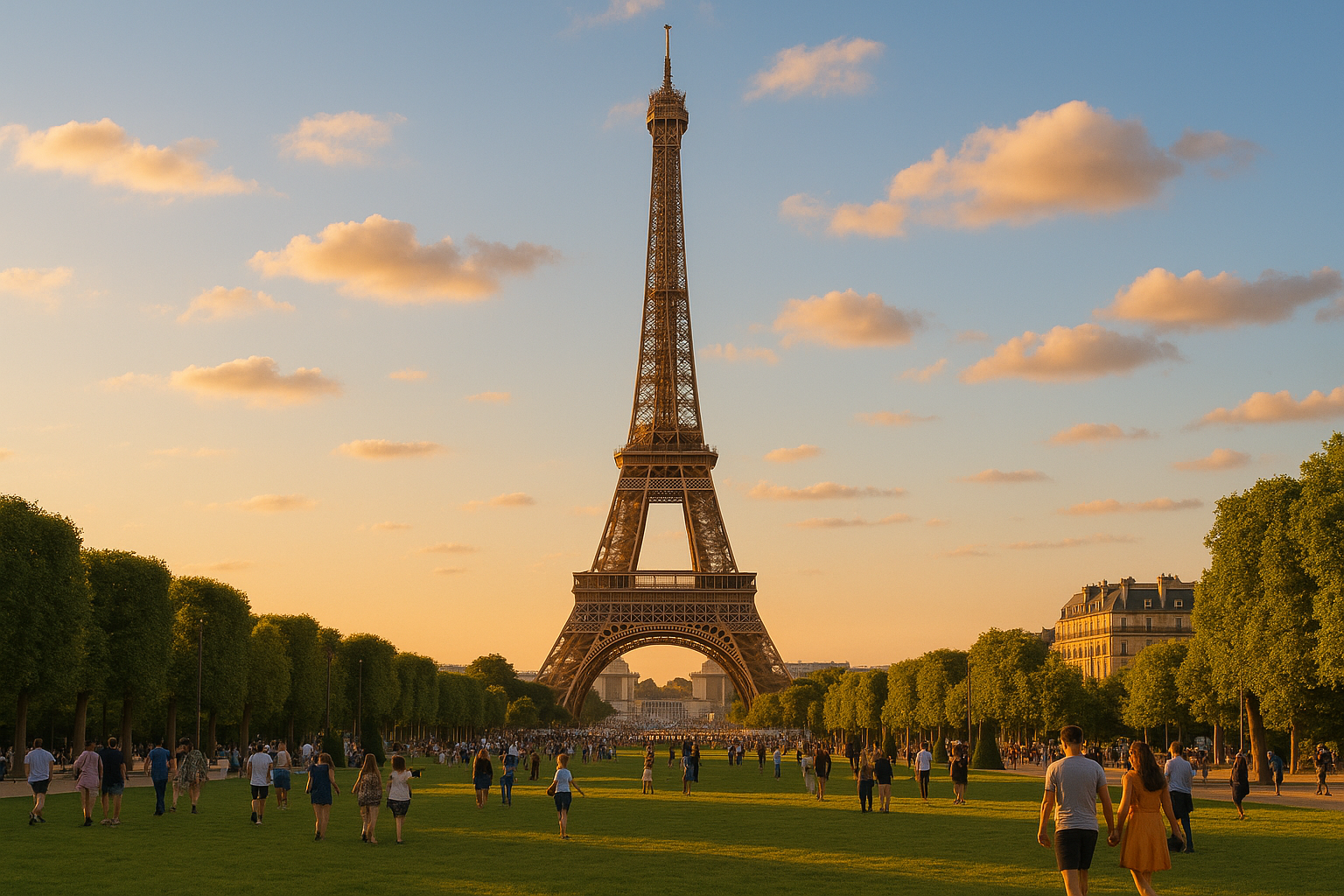
2. Strong excursion component. Paris with the Louvre, the Eiffel Tower, and the Orsay Museum, the castles of the Loire, Mont Saint-Michel, Carcassonne, Versailles, and the old quarters of Lyon offer a very rich program without the need to seek artificial entertainment.
3. Beach and mountain resorts in one country. In summer, tourists choose Nice, Cannes, Saint-Tropez, Biarritz, or Corsica, while in winter, the Alps with resorts like Chamonix, Courchevel, Tignes, and Val Thorens.
4. Shopping and gastronomy. Paris, Lyon, Marseille, and Nice are convenient for shopping, and among souvenirs and local products, it is worth paying attention to cheese, wine, foie gras, macarons, chocolate, Provençal herbs, and cosmetics from French pharmacies and perfume houses.
5. Good transport accessibility within the country. High-speed trains, domestic flights, regional trains, and car rentals allow you to see several regions of France in one trip without complicated logistics.
When is the Best Time to Visit France
The most universal season for traveling through France is late spring and early autumn. In May, June, September, and early October, the weather in Paris, Lyon, Bordeaux, and the Loire Valley is usually comfortable for walks, museums, and trips between cities: temperatures often remain around +18...+26 °C, and the heat is not as exhausting as in the height of summer. For couples, lovers of excursions, gastronomy, and a calmer pace, this is one of the most convenient periods.
The summer season is best for beach holidays in France. On the Mediterranean coast, particularly in Nice, Cannes, Antibes, Juan-les-Pins, and Saint-Tropez, it is already warm in June, while in July and August, the air often warms up to +28...+33 °C and the water to about +22...+26 °C. This is the high season when popular resorts have more people, hotel bookings are more expensive, and it is harder to find convenient options at the last minute; families with children often find the end of June, July, and early September more suitable.
The season for the Atlantic coast is somewhat different. In Biarritz, Arcachon, and the Aquitaine coast, summer is fresher and less stable than on the Côte d'Azur, but this region attracts surfers, lovers of long sandy beaches, and active leisure. The water in the Atlantic is usually cooler than in the Mediterranean, so for a classic beach holiday with small children, the south of France is more often chosen, while for walks, surfing, and combining the sea with gastronomy, the west of the country is preferred.
Winter in France is clearly divided into two formats. The first is urban and festive: Paris, Strasbourg, Colmar, Lyon, and Reims attract visitors with Christmas markets, museums, restaurants, and shopping; temperatures often range from around 0 to +8 °C depending on the region. The second is the ski season in the French Alps, which typically lasts from December to March, and in high resorts sometimes even longer; this period is suitable for those planning to ski and willing to book accommodation in advance.
For a calm trip with fewer queues, March, April, November, and part of December before the holidays are often suitable. During this time, it is easier to find favorable hotels in Paris and other cities, although the weather can be changeable, and the beach season may not yet be open or may have already ended. If the priority is museums, architecture, wine regions, shopping, and restaurants, the shoulder season in France often proves to be more practical than the peak of summer.
The Best Hotels in France
In Paris, tourists often consider hotels with good transport accessibility, not just a central location. Ritz Paris is one of the most famous options for those planning a premium holiday and wanting to stay in the historic part of the city near Place Vendôme. Le Meurice is also one of the legendary Parisian addresses and is more suitable for those who appreciate a classic urban living format close to the Louvre and the Tuileries Garden.
For a trip to the Côte d'Azur, attention is often drawn to Hôtel Negresco in Nice — one of the symbols of the Promenade des Anglais, which is conveniently considered for a romantic trip or a stay focused on the city and the sea. In Cannes, the well-known InterContinental Carlton Cannes is often chosen by those who value a prestigious location on the Croisette and proximity to beach infrastructure and event centers. In the south of France, it is advisable to book accommodation early, especially for July, August, and major event periods.
For the ski season in France, the choice of hotel or residence depends on the level of the resort and access to the slopes. In Chamonix, Val d'Isère, Courchevel, and Méribel, both classic hotels and apartment hotels are popular for families or groups needing kitchens and more space. If traveling with children or for a week of skiing, in France it is often more practical to look not only at the hotel category but also at the distance to the lifts, the availability of storage for equipment, and logistics to ski schools.
The Best Resorts and Cities in France
Paris is the main destination for the first trip to France if museums, architecture, and urban leisure are a priority. Here you can find the Louvre, the Orsay Museum, the Eiffel Tower, Notre-Dame, Montmartre, the Champs-Élysées, and Versailles, which is easy to visit separately for a day. Paris is more suitable for excursions, romantic trips, shopping, and short tours of 3–5 days.
Nice is one of the most convenient beach and urban destinations in France. From here, it is easy to travel to Monaco, Cannes, Antibes, and Èze, and Nice itself attracts visitors with the Promenade des Anglais, the Old Town, and the museums of Matisse and Chagall. This is a good choice for those who want to combine the sea, walks, and restaurants without being fully tied to one hotel.
Cannes and Saint-Tropez are more often chosen for holidays focused on the prestigious coastline, beach clubs, and the atmosphere of the southern season. Cannes is famous for the Croisette and the proximity to other Riviera cities, while Saint-Tropez is better suited for those ready for a higher budget and seeking a resort-style holiday with yacht marinas and beaches around the bay.
Antibes and Juan-les-Pins are convenient for family holidays and a calmer pace on the Côte d'Azur. Here, it is easier to find a balance between beaches, walks, and trips to Nice or Cannes, and the old town of Antibes and the Picasso Museum add an excursion component. For families, a more relaxed resort format compared to the loudest points on the coast is a significant plus.
Biarritz on the Atlantic is suitable for those who love the ocean, surfing, and wider beaches. This is not the same format as the Côte d'Azur: the water is cooler, the weather can be more changeable, but the city is interesting for active travel, walks, and combining the beach with the gastronomy of the Basque region. For surfers and travelers who are not only looking for quiet swimming, this is one of the strongest destinations in France.
Chamonix, Courchevel, Val d'Isère, and Tignes are key winter resorts in France. Chamonix is more associated with alpine landscapes and active mountain leisure, while Courchevel is known for its level of service and developed infrastructure. For the ski season, it is important to evaluate not only the status of the resort but also the difficulty of the slopes, transfers, and the format of accommodation.
Lyon, Bordeaux, Strasbourg, and Marseille should be considered as cities for a second or third trip to France. Lyon is strong in gastronomy and its old town, Bordeaux has a wine culture and elegant architecture, Strasbourg is known for its Christmas season and Alsatian charm, while Marseille has a port character, the Notre-Dame de la Garde basilica, and access to calanques. If you want to see France more broadly than just through Paris and the Côte d'Azur, these cities provide a very different experience.
Nature in France
The nature of France strongly influences the choice of leisure format. In the south of the country, tourists are attracted by the Mediterranean Sea, the bays, and the rocky or mixed beaches of the Côte d'Azur, while in the west, there are long sandy beaches of the Atlantic. If a quieter beach season is needed, the Mediterranean is more often chosen, and if surfing, walking along the ocean, and more space are a priority, the Atlantic coast is preferred.
The French Alps create a distinct type of travel both in winter and summer. In winter, it's about skiing, snowboarding, and mountain villages, while in summer, it's trekking, lifts with panoramic views, lakes, and bike routes. The Pyrenees are also interesting for active leisure, as they have less international hype but offer good opportunities for mountain walks.
Special attention should be paid to Corsica, Provence, and natural attractions like the calanques between Marseille and Cassis, the dunes near Arcachon, and the lavender fields of Provence, which usually look best in June and July. The Loire Valley is more suitable for a calm trip with castles, gardens, and road trips, while Normandy is for those who want to combine the coastline, historical sites, and a cooler climate.
Shopping in France
Paris remains the main city for shopping in France. For department stores, Galeries Lafayette and Printemps on Boulevard Haussmann are the most popular choices, where it is convenient to browse clothing, accessories, cosmetics, and gifts in one place. For a leisurely shopping format, Rue Saint-Honoré, Le Marais, and the Champs-Élysées are suitable, but the budget can vary greatly depending on the brand and season.
If you are interested in outlets, tourists often plan a separate trip to La Vallée Village near Paris. This is an option for those who want to combine brand shopping with discounts, especially during seasonal sales, which traditionally see high demand in France. Before the trip, it is worth checking the dates, as it can be very crowded during peak periods.
In the regions, shopping has a different character. In Provence and southern France, local products, soap, textiles, ceramics, and gastronomy are often purchased at markets and specialized shops, while in Bordeaux, Lyon, or Strasbourg, it is convenient to combine shopping with a gastronomic program. For tourists from outside the EU, there may be an opportunity to get a refund on part of the tax on purchases, but the conditions and paperwork should be clarified directly before booking and the trip.
What Souvenirs to Buy in France
The most practical souvenirs from France are gastronomic. Wine from Bordeaux, Burgundy, or Champagne, Provençal herbs, Dijon mustard, chocolate, caramel, cookies, macarons, jams, and foie gras are often brought back, provided the format of the trip and transport rules allow it. It is good to buy these items not only at tourist spots but also in grocery stores, gourmet shops, and markets.
For gifts that are not related to food, French cosmetics, pharmacy care products, perfumes, Marseille soap, and textiles from Provence are often chosen. Such purchases are convenient as they can easily be adapted to different budgets, and the assortment in France is usually wider than in a typical tourist shop with magnets.
If you want to bring something regional, you should look at ceramics, table textiles, lavender products, local delicacies, and artisanal items. From Alsace, Christmas decorations are often brought during the season, from Provence — aromatic sets, and from Paris — books, posters, sweets, and quality accessories. It is better to focus not on random trinkets but on items that are truly connected to a specific region of France.
Holidays in France
The holiday calendar of France significantly influences the tourist season. Bastille Day on July 14 is accompanied by celebrations, fireworks, and increased demand for accommodation, especially in Paris and large cities. If your trip coincides with this date, it is advisable to book hotels and tickets in advance.
A separate season is the Christmas markets, primarily in Strasbourg and Colmar. At the end of November and in December, these cities become one of the most popular destinations for winter travel, so hotel prices often rise, and the most convenient options are quickly taken. For those who love festive decorations, local pastries, and leisurely walks, this is one of the strongest winter formats in France.
In Cannes, the Cannes Film Festival has a significant impact on demand, and its dates should be checked before the trip. During this period, the city becomes much more expensive and busier, but for some tourists, this event atmosphere is the reason to choose a trip. In Provence, summer brings interest in the lavender season, and various regions hold wine and gastronomic events, but it is best to clarify their dates separately.
New Year in France
The New Year in France is primarily suitable for urban or mountain travel rather than beach holidays. In Paris, Strasbourg, Lyon, and other cities during this time, there are festive markets, winter displays, seasonal menus in restaurants, and ice rinks, although the weather is usually cool, with temperatures around 0...+8 °C depending on the region. For those who want to combine the festive atmosphere with museums, walks, and shopping, this is a great option.
The second popular format is a New Year's trip to the French Alps. Courchevel, Méribel, Val Thorens, Tignes, and Chamonix are in very high demand at this time, so accommodation, transfers, and ski passes should be planned in advance. If bookings are made late, the choices may be limited even with a high budget.
For a New Year trip to France, it is important to reserve not only the hotel in advance but also restaurants, especially in Paris and at famous resorts. Some establishments operate with special festive menus, and in tourist areas, places are taken quickly. A calmer and often more economical option is to travel in the first weeks of January when the festive mood is still present, but the rush gradually decreases.
Healthcare in France
Medical assistance in France is generally of a high standard, but for tourists, the most important thing is to have valid health insurance for the entire duration of the trip. This is especially relevant for skiing holidays, active mountain routes, trips with children, and the summer season in the south when overheating, sunburn, or dehydration may occur. Before departure, it is advisable to check what exactly is covered by the policy.
When traveling to France, it is advisable to take a basic first aid kit with personal medications, cold remedies, digestive disorders, and sun protection. On the Côte d'Azur and in Provence in summer, the sun can be quite strong, and during a busy excursion program in Paris or large cities, it is useful to have comfortable shoes and water. If there are prescription medications, it is better to transport them in their original packaging and have accompanying documents if needed.
Food and water in France usually do not pose any particular difficulties for tourists, but during tastings of cheese, seafood, wine, or heavier regional dishes, it is important to consider personal habits and sensitivities. In summer on the coast, and in winter in the mountains, the daily routine and loads can differ significantly from the usual, so it is better not to plan an overly tight schedule on the first day after arrival.
Customs Regulations in France
When traveling to France, it is advisable to check the current customs regulations regarding the importation of currency, alcohol, tobacco, medications, products, and expensive purchases in advance. The conditions may change depending on the country of departure, the type of goods, and the current EU regulations, so it is not advisable to rely solely on old advice from forums. Special attention should be paid to the transport of animal products, delicacies, and prescription medications.
Personal belongings, equipment for personal use, and standard tourist purchases are usually transported without complications, but when significant amounts of cash, large volumes of purchases, or specific goods are involved, separate declaration requirements may apply. If you plan to export wine, cosmetics, gastronomy, or branded shopping, it is better to check the rules before the trip and keep receipts until the end of the journey.
Visa Regulations for Ukrainians
France is part of the Schengen Area, so Ukrainian citizens can usually travel without a visa for up to 90 days within 180 days with a biometric foreign passport. However, before traveling, it is essential to check the current entry requirements, as they may change, as well as the list of accompanying documents that may be requested at the border or during check-in.
For a trip to France, it is usually necessary to have confirmation of accommodation bookings, return tickets or an itinerary, sufficient financial guarantees, and health insurance. If a longer stay, study, work, or other travel formats are planned, the rules may differ from a short tourist visit, so they need to be clarified separately before booking a tour.
Tours to France
When selecting tours to France, it is worth considering not just the price but also the vacation scenario. For the first trip, excursion tours that include Paris, Versailles, and, if possible, a visit to the castles of the Loire or Normandy are often the most convenient. If the priority is the sea, it is better to look for holidays on the Côte d'Azur with accommodation in Nice, Cannes, Antibes, or Corsica, and if a winter season is needed — ski tours to the Alps with early booking.
Families with children often prefer summer tours to southern France or combined routes with several nights in the city and a few days by the sea. Couples are often interested in romantic trips to Paris, Provence, Alsace, or wine regions, while active travelers may find routes through the Alps, the Atlantic coast, or Corsica suitable. The "all-inclusive" format in France is less typical than in classic beach countries, so here breakfasts, apartments, or city hotels with flexible programs are more often chosen.
When choosing a tour to France through Farvater Travel, it is essential to determine the season, type of leisure, and region right away: Paris and museums, Riviera beaches, skiing in the Alps, Lyon gastronomy, Bordeaux wine, or Christmas Strasbourg. Early booking is especially important for summer on the Côte d'Azur, the New Year period, and winter resorts, while last-minute deals are more common for city destinations or during the shoulder season. France is well-suited for those who want not just to change their surroundings but to have a clearly tailored travel format that matches their interests and pace of leisure.